Why Some Security Threats Are Discovered Too Late.

There is no clear warning that a breach is imminent. No alarm that says someone has entered an area they should not be in.
Sometimes the first sign is a broken fence. Or missing equipment. Or a call from the ground saying, “Something has happened.”
By then, the damage is often already done.
The Core Limitation of Traditional Security
Most organisations still rely on a combination of security guards, patrol vehicles, fences, and fixed cameras. These tools remain essential.
But they share one fundamental limitation: they cannot see everything at once.
On a large farm, industrial facility, estate, or construction site, security teams can only cover a limited area. Remote corners, dense vegetation, and areas between patrol routes become natural blind spots.
The problem is not always a shortage of personnel. In many cases, it is simply a shortage of visibility. An incident can unfold for 30 minutes, one hour, or longer before anyone becomes aware of it.

When Minutes (and Hours) Matter
Consider a large agricultural operation. If unauthorised people or cattle enter a restricted section and the information reaches the security team immediately, a response is still possible.
If the same information arrives two hours later, the situation has usually changed significantly — crops may already be damaged, equipment may be gone, or the intruders may have left.
The same pattern appears on construction sites, warehouses, industrial facilities, and critical infrastructure. The earlier a threat is detected, the more options security teams have. Early visibility is not a luxury; it is often the difference between a manageable incident and a costly loss.
Closing the Visibility Gap
This is where aerial surveillance strengthens traditional security systems. Drones give security teams a rapid, elevated view of large and hard-to-reach areas. They can:
- Cover hundreds of hectares in minutes
- Observe remote or densely vegetated zones
- Detect unusual movement or activity
- Provide real-time visual information to support faster decisions
The goal is not to replace security personnel. It is to give them a clearer, wider view of what they are responsible for protecting.
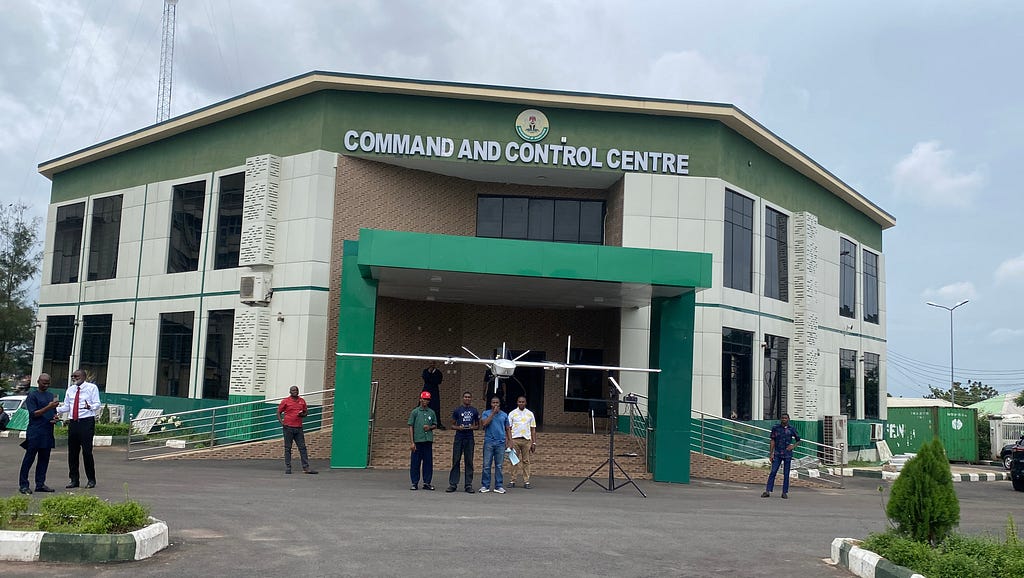
Companies like BeatDrone use drone technology to help organisations and state governments improve situational awareness and monitor areas that ground-based systems struggle to cover effectively.
Security Is Evolving
The future of security will not be defined only by the number of guards or cameras. It will be defined by how well people, technology, and information work together.
A security team that can see more can respond better. An organisation that identifies a problem before it escalates has a far higher chance of protecting its people, assets, and investments.
Key Takeaway: A security threat discovered early can often be managed. A security threat discovered too late usually becomes a loss.
As organisations operate across larger and more complex environments, better visibility is becoming an essential part of modern security — not an optional extra.

Coming Next: Construction sites are constantly changing, yet many project managers still rely heavily on walking the site to understand what is happening. So why is walking a construction site no longer enough?
Beat Drone
Originally published on Medium